



They're Calling On You
You can help protect Eastern Lowland Gorillas in Africa simply by donating your old mobile phones.
No one knows exactly how many Eastern Lowland Gorillas survive in the wild, but with 8,500 believed to be remaining they are Critically Endangered. The survival of every gorilla counts.
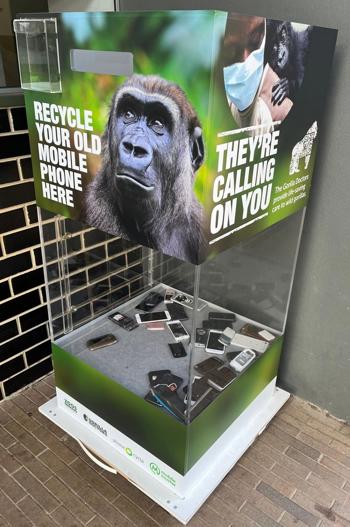
You can help gorillas in the wild simply by recycling your phones at the zoo!
Every phone dropped at our zoos raises funds to support the work of the Gorilla Doctors, who provide life-saving medical care to wild gorilla populations.
With your help, we have recycled and re-purposed more than 185,000 devices collected by individuals, schools and businesses, which has raised more than $300,000 for conservation.
We accept mobile phones in any condition, as well as tablets, smartwatches and accessory items like chargers and headphones.
If you can, please unlock phones and reset to factory settings before dropping your phones to us (see below for instructions).
How you can help
Simply bring any old mobile phones and accessories on your next visit to any of our zoos (Melbourne Zoo, Werribee Open Range Zoo, Healesville Sanctuary or Kyabram Fauna Park) and place into the specially marked They're Calling On You collection bins in the following locations:
- Melbourne Zoo: Just inside the Main Entrance, next to the Information Booth
- Werribee Open Range Zoo: At the entrance, next to the retail shop
- Kyabram Fauna Park: At the entrance to the cafe and retail shop
- Healesville Sanctuary: Outside the retail shop
Do you have 10 or more phones? You can book a FREE courier collection below.
Donate below
Want to start your own phone collection at your school, workplace or community group?
You can run a mobile phone collection drive at your workplace or school, or donate old staff phones. This can be a great way for your organisation to make a difference to wildlife and the environment. Simply download and distribute the below materials to colleagues and friends to let them know how to get involved in your collection drive.
- Collection resource book (PDF)
- They're Calling on You A3 poster for printing (PDF)
- They're Calling on You A4 Information sheet (PDF)
- Phone Collection box labels (PDF)
Contact us if you have any questions about your phone collection. We also love to hear how your collection is going!

What's the connection between mobile phones and gorillas?
One of the biggest threats to Eastern Lowland Gorillas is the mining of minerals such as coltan, a metallic ore used in mobile phones and other electronic devices. Not only does mining destroy forest habitat, but it brings people and gorillas into closer contact, increasing the risk of disease and injury from people.
The best thing you can do is use your phone, or any technological device, for as long as possible. When you do need a new phone, you can help wild gorillas by recycling your old phone through our They’re Calling On You program.
Make a big difference
Donating your used mobile phones helps raise important funds for the Gorilla Doctors, who are the only organisation able to provide life-saving medical care to fragile wild gorilla populations in Africa. The forest is the hospital they work in to treat gorillas injured or impacted by human activities such as mining.
Every phone makes a big impact. Below is an estimate of how phone collections can help wild gorillas:
- 5 phones = health monitoring of a baby gorilla for a day.
- 10 phones = petrol needed for Gorilla Doctors to reach the forest edges before hiking in to monitor the health of gorillas.
- 50 phones = anaesthetic to help provide veterinary care to an injured or ill gorilla
- 100 phones = a full set of rain gear allowing Gorilla Doctors to work in bad weather
Frequently Asked Questions
Our recycling partner Mobile Muster breaks down phones and accessories into their different component materials. From here they are able to recycle more than 95% of your phone's materials. Phones in working condition are directed to our refurbishment partner PhoneCycle to be repaired, securely wiped and their lifespan extended.
We understand the importance of data security. All data contained on phones is destroyed in the recycling process, or cleared and deleted through refurbishment. However for peace of mind, we recommend Factory Resetting and clearing data before sending phones in. Our partner Mobile Muster has provided tutorial videos on how to manage your data:
Disclaimer:
While we make every effort to ensure that the material and information on this website is accurate and up-to-date when published, it is general information intended as a guide only. Please keep in mind that you are responsible to ensure that any personal information has been erased from your mobile device. If needed, seek advice relevant to your mobile phone from the manufacturer.
We accept mobile phones, tablets and wearable technology such as smartwatches of any age and in any condition, as well as all associated accessories (such as chargers and headsets).
Yes. Click HERE to donate corporate fleet phones. Our partners at PhoneCycle are well established to support secure handling of devices and a range of Corporate Social Responsibility (CSR) initiatives for mobile phones and a range of other e-waste as well.
We'd love to hear from you! Email us at takeaction@zoo.org.au