


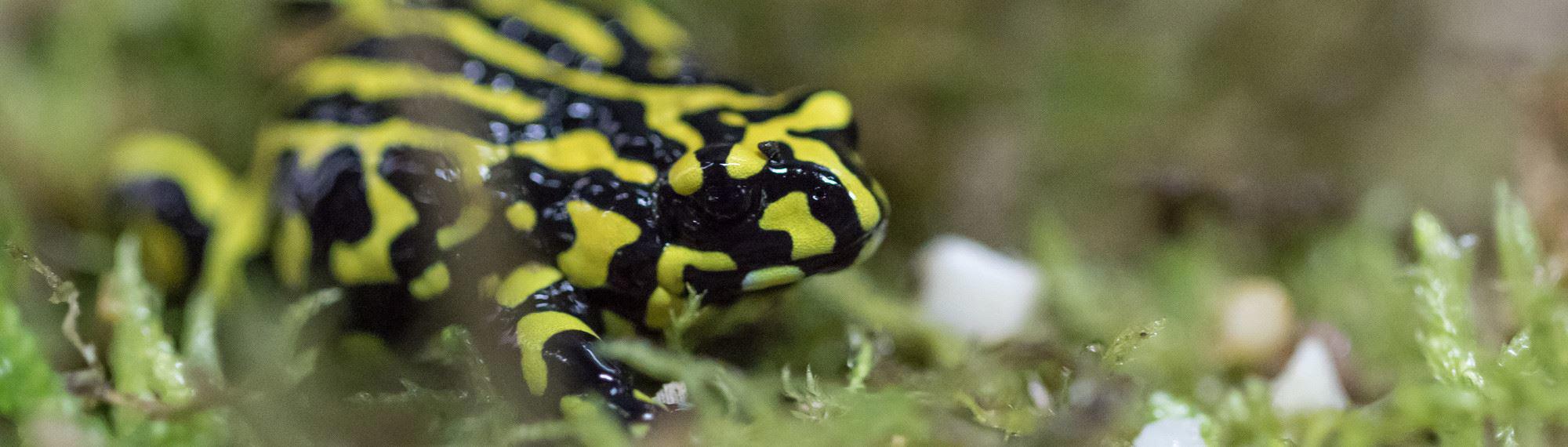
Southern Corroboree Frog
One of Australia’s best known frogs is critically endangered.
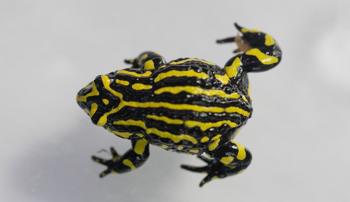
Easily recognised by their bright yellow and black stripes, probably only 50 Southern Corroboree Frogs remain in their alpine habitat, the Kosciusko National Park.
Major threats
The main threat to the Southern Corroboree Frog is the disease Chytridiomycosis, caused by infection with Amphibian Chytrid Fungus. This is a big cause of frog deaths worldwide. Another issue is climate change, which is having an effect on the frog’s alpine home environment.
The plan for fighting extinction
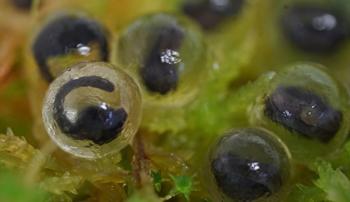
Zoos Victoria has developed successful captive breeding techniques for the Southern Corroboree Frog. There is also a system for reintroducing the eggs and tadpoles we’ve bred into the wild populations.
We continue to research the role of chytrid fungus in the decline of frog numbers.
How you can help
Do what you can to create community awareness and support for the Southern Corroboree Frog. This includes visiting our zoos. By visiting Healesville Sanctuary, Melbourne Zoo or Werribee Open Range Zoo, you will be supporting our work to fight extinction.
Donate if you can, because every little bit helps. As we are a not-for-profit organisation, all donations go towards our important conservation efforts.
Discover more about local conservation events and join the growing number of wild activists taking action for local wildlife.
Is your classroom learning about the Southern Corroboree Frog?
Browse through our collection of animal teaching and learning resources for students. These include animal toolkits, e-books, Ask a Zoo Expert resources, video showcases and real-world examples to support the VCE Study Design.
Southern Corroboree Frogs can be seen at both Healesville Sanctuary and Melbourne Zoo.
